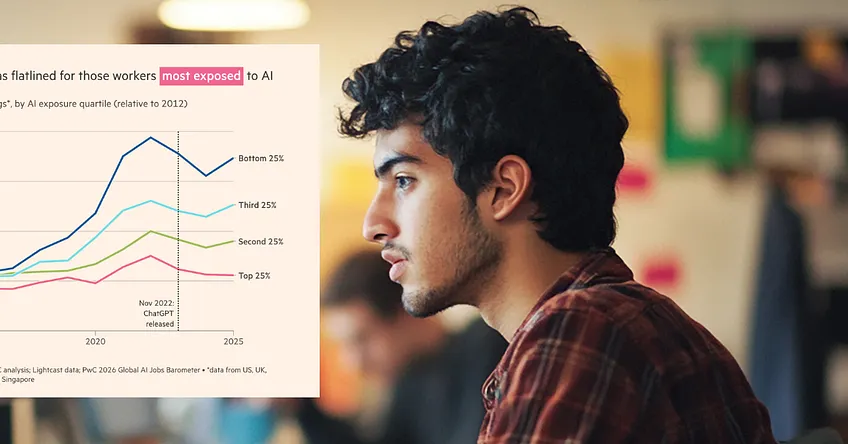



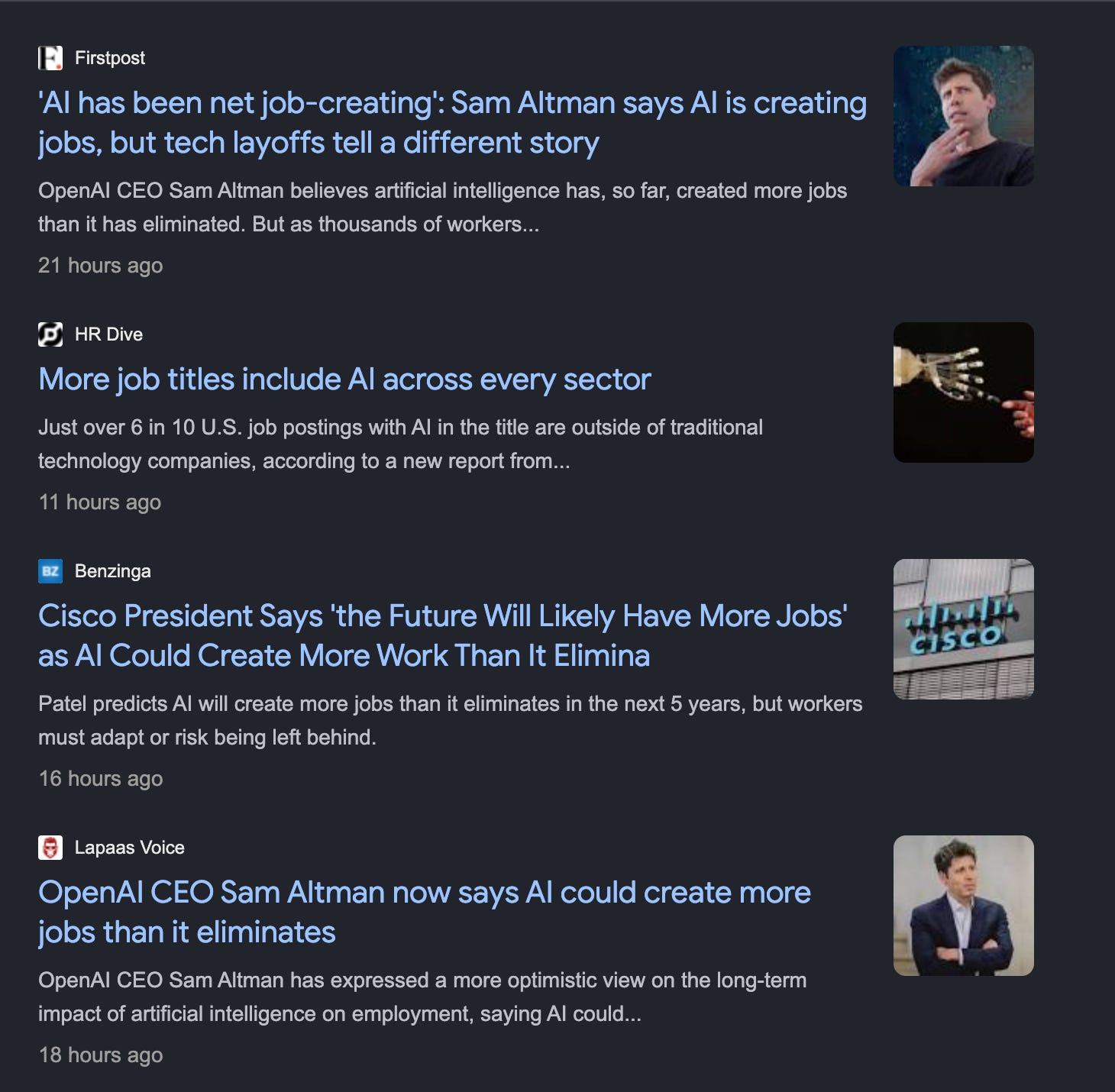
If you’ve been following the headlines recently, or been inside a venture circle, you’ve heard these confident lines: AI is creating jobs. More AI products get built, so more people are needed to build them. Demand is up.
All of this despite news of rounds and rounds of layoffs across organizations globally.
Both can’t be the whole story, or can it?
I run an Applied AI firm. We build and ship custom, AI-native software for other companies. Because we’re on the delivery side, we feel a market shift in the actual work months before it turns into a take online.
It is a fundamental change in what the job actually is.
And what we’re seeing isn’t more of the same jobs coming back. It’s a hybrid: much less of the work a machine can now do, and much more of the work it can’t.
Why both headlines are true at once
Here’s how both headlines are true at the same time. The cutting and the hiring are hitting different layers of the same job.
What’s getting cut is the output layer. Turning a clear spec into working code. Turning a brief into a first draft. Turning instructions into a deliverable. For a long time that was most of what junior work was, in engineering and well beyond it. A machine does a competent first pass of it now, so it’s getting cheaper by the month.
What’s getting scarcer is everything above that layer. Deciding what to build. Catching the thing that runs fine in a demo and falls over in production. Owning the call when it actually matters. That work didn’t get cheaper. It got more valuable, because now there’s a flood of fast output and not enough people who can tell what’s actually good.
Our experience with customers turning to AI first
Even a year ago, most of our engagements started from a blank page. Discovery, then requirements, then build. Now a growing share starts with a vibe-coded prototype the client already made. They describe what they want, an AI builds them something rough, and they bring it to us to fix what they couldn’t, or didn’t know needed fixing, before it ships at scale.
That’s genuinely useful. The prototype shows us what the customer actually pictures, which pre-AI used to take weeks to pull out of them.
However, contrary to what most people expect, this doesn’t reduce the work. It just demands a different caliber of skills. Making the inside of that thing correct, secure, and able to hold up at scale is often harder than starting clean.
So from the outside, when you count the jobs and the number goes up. From inside the work, you see the seats filled by different people doing a different job. Both are real. Only one of them tells you whether the work is any good.
And if you’ve been around long enough in the tech world, you’ve seen this play out before.
Compilers were going to end programming. Frameworks were going to end it again. Cloud was going to end the sysadmin. Each time, the mechanical part got cheaper and the scarce part moved up a level. Each time, the people who read it as “fewer jobs” were wrong about the number and right about the fear. The count went up. The job description changed underneath them.
The same thing is happening now, only one level higher.
And not only in engineering. In marketing, design, operations, law, the pattern is identical. What’s getting repriced isn’t the whole role, but the part of the role that involved mostly typing and not problem solving.
If you’re hiring or cutting, based on raw output, you’re trading on the one thing that just got cheap. The people who get more valuable from here are the ones who can decide, judge, and stand behind the call. Most companies don’t have enough of them to begin with, and you can’t conjure them back in a quarter.
Conclusion
So, yes AI is creating jobs, and it is also cutting them. It’s doing both to the same job, sometimes in the same week, and the thing that decides which side you land on is whether the work needs a human to be accountable for it, or only to produce it.
That question is going to sort a lot of careers, and a lot of companies, over the next few years.
If you're hiring, building, or exploring the depths of the world of AI, subscribe for an insider’s view.
Originally posted on "Wide Angle by Pradeep Nalluri" on July 14, 2026.